Introduction: Why Scientific Instrument Companies Need a LinkedIn Marketing StrategyAuthor: www.linkedin.com/in/m-nadeem-1643a038
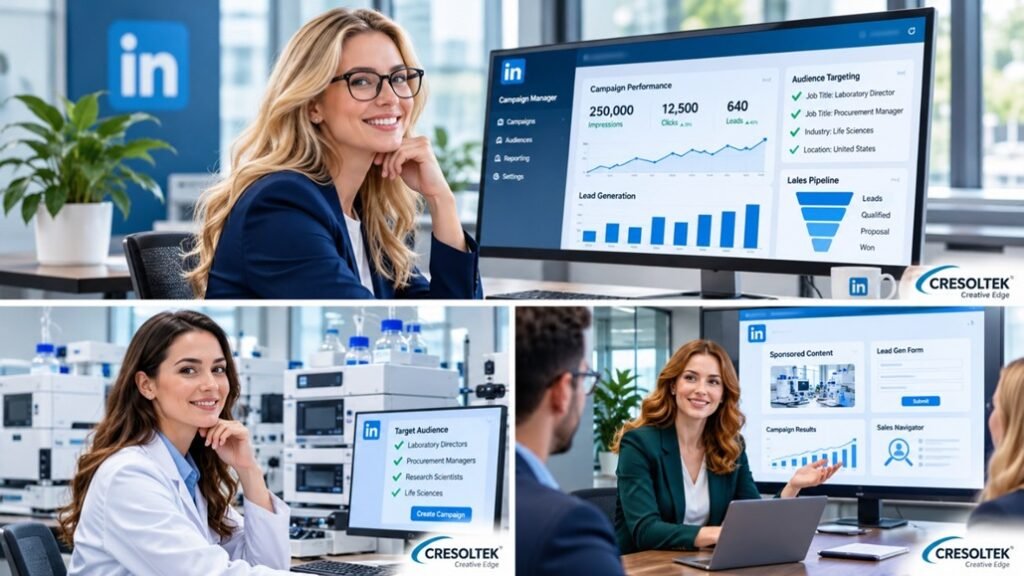
Selling scientific instruments and laboratory equipment is not like selling ordinary consumer products. Purchasing decisions often involve laboratory directors, procurement managers, research scientists, quality control professionals, engineers, finance departments and senior management. Each stakeholder evaluates a potential purchase from a different perspective.
A laboratory director may prioritize analytical performance, accuracy and application suitability. A procurement manager may focus on pricing, supplier reliability, warranties and delivery schedules. A researcher may be more interested in instrument capabilities, methodology and compatibility with existing laboratory systems.
For manufacturers and suppliers of scientific instruments, reaching these decision-makers requires a focused B2B marketing strategy.
This is where LinkedIn marketing and B2B lead generation can create significant business opportunities.
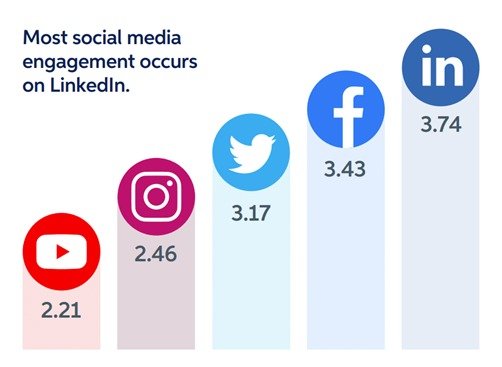
LinkedIn has developed into an important professional marketing platform where businesses can establish credibility, communicate technical expertise, identify potential customers and build relationships with people involved in purchasing decisions. LinkedIn reported in October 2025 that its platform had 1.2 billion members, including more than 130 million decision-makers. This represents a substantial professional audience for companies operating in specialized B2B markets. (LinkedIn’s B2B audience research)
For scientific instrument manufacturers, LinkedIn should not be treated simply as another social media platform for sharing company announcements. It can become an important component of an integrated sales and marketing system that supports brand recognition, customer acquisition, distributor development and international market expansion.
At CRESOLTEK, we help scientific instrument manufacturers, laboratory equipment suppliers and technical B2B companies develop strategy-led digital marketing and lead-generation programs designed to reach relevant business audiences and support sustainable growth.
This article explains how to use LinkedIn marketing to connect with procurement managers, laboratory directors and other influential scientific equipment buyers.
1. Why LinkedIn Is Important for Scientific Instrument Manufacturers
Traditional B2B sales methods often depend on trade exhibitions, distributors, direct sales visits, referrals, telephone calls and established industry relationships. These channels remain valuable, but they do not always provide continuous access to new markets and potential customers.
LinkedIn adds a digital channel through which manufacturers can communicate directly with relevant professional audiences.
For example, a company manufacturing analytical instruments may want to connect with:
- Laboratory directors and laboratory managers.
- Procurement managers and purchasing officers.
- Research scientists and university professors.
- Quality assurance and quality control managers.
- Pharmaceutical manufacturing professionals.
- Biotechnology and life sciences researchers.
- Food testing and environmental laboratory professionals.
- Industrial testing and inspection managers.
- Scientific equipment distributors and resellers.
These professionals may be involved in identifying equipment requirements, evaluating technical specifications, comparing suppliers, preparing purchase recommendations or approving budgets.
LinkedIn offers professional audience information and advertising options that allow businesses to target people using attributes such as job title, company, industry and seniority. (LinkedIn advertising audience targeting)
For scientific equipment businesses, this makes it possible to develop marketing campaigns around the industries, organizations and professional roles most relevant to their products.
Rather than communicating with a general audience, manufacturers can develop a more focused approach to reaching the people who influence equipment purchasing decisions.
2. Understand the Scientific Equipment Buying Committee
One of the biggest mistakes in B2B marketing is assuming that only one person makes the purchasing decision.
In reality, acquiring a sophisticated analytical instrument, laboratory testing system or industrial measurement device may involve several departments.
Understanding their individual requirements is essential for effective LinkedIn marketing.
Laboratory Directors
Laboratory directors are responsible for laboratory performance, equipment selection, resource management and operational requirements.
They may evaluate:
- Analytical accuracy and instrument performance.
- Testing capabilities and application suitability.
- Equipment reliability and service support.
- Laboratory productivity and workflow efficiency.
- Compliance with relevant testing procedures.
LinkedIn content strategy: Share application notes, instrument demonstrations, technical comparisons, laboratory efficiency insights and product capabilities.
Procurement Managers
Procurement managers evaluate suppliers and coordinate purchasing processes. Their responsibilities may include supplier identification, price negotiations, quotations and purchase approvals.
They may consider:
- Equipment pricing and commercial terms.
- Supplier reputation and reliability.
- Warranty and after-sales support.
- Delivery schedules and availability.
- Installation, training and maintenance arrangements.
LinkedIn content strategy: Publish buying guides, supplier qualification information, product catalogues, commercial capability statements and procurement-focused case studies.
Research Scientists and Laboratory Professionals
Researchers and technical specialists often influence equipment selection by identifying application requirements and evaluating technical performance.
They may look for:
- Instrument specifications.
- Detection limits and analytical capabilities.
- Measurement accuracy and repeatability.
- Sample compatibility.
- Software, data management and connectivity.
LinkedIn content strategy: Share technical articles, product application videos, research-related content and educational material.
Senior Management and Business Owners
CEOs, directors and business owners may approve investments based on operational efficiency, financial return and business expansion.
LinkedIn content strategy: Communicate the business value of instrumentation, productivity improvements, market opportunities and the financial benefits of appropriate equipment investments.
The important point is to develop different messages for different stakeholders while maintaining a consistent brand position.
LinkedIn’s own B2B marketing guidance emphasizes understanding buyer personas and reaching the wider buying committee rather than concentrating all marketing activity on one individual. (LinkedIn lead-generation guidance)
3. Build an Effective LinkedIn Company Page for Scientific Equipment Marketing
Your LinkedIn Company Page is often one of the first places potential customers visit when researching your organization.
A poorly maintained page can weaken confidence, even when your company offers excellent products.
A professional Company Page should explain what your business manufactures, which industries it serves, what makes its products relevant and how potential buyers can contact your sales team.
Optimize Your Company Description
Avoid using vague statements such as “leading supplier of innovative solutions.”
Instead, communicate your actual business activities.
For example:
“ABC Scientific Instruments manufactures and supplies analytical instrumentation, laboratory testing equipment and measurement solutions for pharmaceutical, biotechnology, food testing, petrochemical, environmental and research laboratories.”
Include relevant product categories, applications, industries served and geographical markets.
Use Relevant Keywords
Naturally incorporate search terms associated with your business, such as:
- Scientific instrument manufacturer.
- Laboratory equipment supplier.
- Analytical instruments.
- Laboratory testing equipment.
- Pharmaceutical laboratory equipment.
- Industrial testing instruments.
- Material testing equipment.
- Environmental monitoring instruments.
These terms help visitors understand your product portfolio and improve the relevance of your company information.
Showcase Your Products and Expertise
Where appropriate, publish product announcements, technical demonstrations, application notes, company updates, exhibition participation and customer education content.
Your page should demonstrate that your company understands the technical and commercial requirements of the industries it serves.
Include Clear Contact Information
Make it easy for potential buyers and distributors to reach your team. Include your website, business email, telephone number and relevant enquiry options.
Your Company Page should function as a professional business introduction, not simply as a collection of social media posts.
4. Use LinkedIn Sales Navigator to Identify Procurement Managers and Laboratory Directors
For scientific equipment manufacturers, identifying the right prospects is often more valuable than collecting large numbers of general business contacts.
LinkedIn Sales Navigator provides advanced lead and account search capabilities that can help sales teams identify relevant professionals and organizations.
Its search filters include current company, company size, industry, job title, seniority, geography and other professional attributes. Account searches can also use company characteristics and headquarters location. (LinkedIn Sales Navigator search filters)
Define Your Ideal Customer Profile
Before searching for contacts, identify the organizations most likely to purchase your products.
For example, a manufacturer of high-performance liquid chromatography (HPLC) systems may target:
- Pharmaceutical manufacturing companies.
- Contract research organizations.
- Biotechnology companies.
- University research laboratories.
- Food and beverage testing laboratories.
- Independent analytical laboratories.
A manufacturer of X-ray fluorescence (XRF) analyzers may target:
- Mining and mineral processing companies.
- Precious metal refineries.
- Gold testing laboratories.
- Cement manufacturers.
- Metal processing industries.
- Inspection and quality control organizations.
Identify Relevant Job Titles
Depending on the product category, your target job titles may include:
Laboratory and scientific professionals
- Laboratory Director
- Laboratory Manager
- Research Director
- Analytical Chemist
- QC Manager
- Quality Assurance Manager
- R&D Manager
Procurement and purchasing professionals
- Procurement Manager
- Purchasing Manager
- Strategic Sourcing Manager
- Supply Chain Manager
- Category Manager
- Procurement Director
Industrial and technical management
- Engineering Manager
- Technical Director
- Plant Manager
- Operations Manager
- Quality Director
Do not rely exclusively on job titles. Responsibilities vary between companies, and the same title may have different purchasing authority in different organizations.
Build Target Account Lists
Create a list of organizations that match your ideal customer profile.
For example, a manufacturer targeting pharmaceutical laboratories in the United States could develop separate prospect lists for pharmaceutical manufacturers, biotechnology companies and contract laboratories.
Sales Navigator’s account and lead search functionality can then support more focused prospect identification.
Important: A prospect’s presence on LinkedIn does not automatically mean they are ready to purchase. Use professional information to identify relevance, then qualify the opportunity through appropriate business conversations.
5. Develop a LinkedIn Content Marketing Strategy for Scientific Instruments
One of the most effective ways to establish credibility on LinkedIn is to publish useful, relevant and technically accurate content.
Scientific equipment buyers often need detailed information before contacting a supplier. They may research applications, evaluate competing products and compare instrument specifications before arranging a demonstration or requesting a quotation.
Your LinkedIn content should help answer these questions.
A. Product-Focused Content
Publish informative content about your main instruments and product categories.
Examples include:
- How to select the right analytical balance for a pharmaceutical laboratory.
- Benchtop versus handheld XRF analyzers: applications and selection considerations.
- Choosing a particle size analyzer for pharmaceutical research.
- How chromatography instruments support analytical testing.
- Selecting a moisture analyzer for food and agricultural applications.
Avoid turning every post into a direct sales announcement. Explain the application, buyer requirement and technical value first.
B. Application-Based Content
Application-focused content is particularly relevant to scientific and laboratory businesses because buyers frequently search for instruments based on what they need to measure, detect or analyse.
For example:
Pharmaceutical laboratories: HPLC, GC, dissolution testing, stability testing and analytical instrumentation.
Food and beverage laboratories: Moisture analysis, grain testing, milk analysis and food quality testing.
Environmental laboratories: Water testing, wastewater analysis, particle monitoring and environmental measurement.
Mining and metals: XRF analysis, elemental composition, precious metal testing and material identification.
Research institutions: Spectroscopy, chromatography, particle characterization and advanced analytical techniques.
A consistent application-based content strategy helps communicate industry knowledge and provides potential buyers with useful information.
C. Educational and Technical Content
Educational posts can demonstrate your company’s understanding of scientific applications and technical buyer requirements.
Examples:
- What is the difference between an SDD and Si-PIN detector in XRF analysis?
- How does HPLC work in pharmaceutical quality control?
- What factors influence the accuracy of an analytical balance?
- What is the importance of particle size distribution in pharmaceutical formulations?
- How is Karl Fischer titration used for moisture determination?
Technical content should be reviewed by knowledgeable product or application specialists before publication.
D. Product Demonstration Videos
Short demonstration videos can help potential buyers understand how equipment works and how it is used in real applications.
Useful video topics include:
- Instrument installation and initial setup.
- Step-by-step operating demonstrations.
- Sample preparation procedures.
- Key product features.
- Routine maintenance and troubleshooting.
- Application-specific measurement demonstrations.
A clear video showing an instrument in operation may communicate information that is difficult to convey through a short promotional message.
E. Customer Success Stories
Where customers have given permission, publish genuine project stories explaining the application, customer requirement, solution supplied and documented outcome.
For example:
“How a Pharmaceutical QC Laboratory Selected an Analytical Instrument for Routine Quality Testing.”
Avoid disclosing confidential customer information or making unsupported performance claims.
6. Establish Technical Authority Through Personal LinkedIn Profiles
A scientific equipment manufacturer’s Company Page is important, but the professional profiles of its leadership, product specialists, application chemists and sales managers can also contribute to brand credibility.
Laboratory directors and procurement managers are not only evaluating companies. They are evaluating the knowledge and professionalism of the people behind those companies.
Encourage relevant team members to participate in LinkedIn conversations.
For example:
- A product manager can explain technical features and applications.
- An application chemist can publish educational content.
- A sales director can discuss industry trends and market developments.
- A company founder can communicate product innovation and business strategy.
- A service manager can explain installation, maintenance and support capabilities.
Personal profiles should be complete, professional and consistent with the company’s brand position.
The objective is to demonstrate genuine expertise, not to turn every employee into a salesperson.
7. Use LinkedIn Advertising to Generate Qualified B2B Leads
Organic LinkedIn activity can help build visibility and professional relationships, but paid advertising may help companies reach carefully selected audiences at greater scale.
LinkedIn Ads provide targeting options based on professional attributes, including job titles, companies, industries and seniority. Businesses can also explore account targeting, contact targeting and website retargeting. (LinkedIn Ads targeting)
For scientific instrument manufacturers, campaigns should be developed around clearly defined products and customer groups.
Campaign 1: Reach Laboratory Directors
Promote educational content, product application guides or demonstration opportunities to relevant laboratory management audiences.
Campaign 2: Reach Procurement Managers
Promote supplier capabilities, product catalogues, purchasing guides and quotation-request landing pages.
Campaign 3: Reach Pharmaceutical and Biotechnology Companies
Develop campaigns around the analytical and laboratory instrumentation required by pharmaceutical manufacturing, research and quality control departments.
Campaign 4: Promote New Product Launches
When introducing a new scientific instrument, use LinkedIn advertising to communicate product capabilities, applications, launch information and demonstration opportunities.
Campaign 5: Develop Distributor and Reseller Opportunities
Manufacturers seeking international distribution partners can develop campaigns targeting scientific equipment distributors, laboratory suppliers and technical trading companies in selected markets.
Do not combine every product and audience into one campaign. Separate campaigns make it easier to evaluate performance and adapt the message to each buyer segment.
8. Use LinkedIn Lead Gen Forms to Capture Business Enquiries
Generating interest is only one part of B2B marketing. Businesses also need a practical way to convert that interest into enquiries.
LinkedIn Lead Gen Forms allow advertisers to collect prospect information through forms associated with LinkedIn advertisements. The platform can pre-fill certain professional details, helping reduce the amount of information prospects need to enter.
LinkedIn’s current guidance recommends starting with approximately three to four fields rather than automatically using the maximum available fields. It also emphasizes matching the form’s messaging with the advertisement and following up when promised. (LinkedIn Lead Gen Form best practices)
For scientific instrument companies, useful form fields may include:
- Full name.
- Business email.
- Company name.
- Instrument or application of interest.
Depending on the campaign, you can invite prospects to:
- Request a product quotation.
- Download an instrument catalogue.
- Book a product demonstration.
- Discuss a laboratory application.
- Request a distributor partnership discussion.
- Speak with a product specialist.
Avoid asking unnecessary questions during the first interaction. Your sales team can collect additional technical and commercial details during follow-up.
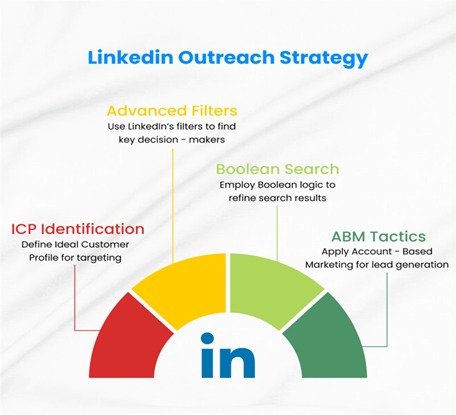
9. Develop an Effective LinkedIn Outreach Strategy
LinkedIn outreach is most effective when it begins with research and relevance rather than generic sales messages.
A procurement manager receiving a message about an analytical instrument that has no connection to their industry is unlikely to respond positively.
Before contacting a prospect, understand:
- The company’s business activities.
- The industries and markets it serves.
- The person’s professional responsibilities.
- Whether the company operates relevant laboratories.
- Which product categories may be relevant.
- Whether there is a reasonable business reason to initiate contact.
Example 1: Connecting with a Laboratory Director
“Hello [Name],
I noticed your involvement in laboratory operations and analytical testing. We work with scientific instrumentation used in research and quality control applications.
I would be pleased to connect and exchange insights on laboratory instrumentation and emerging analytical technologies.
Best regards,
[Your Name]”
Example 2: Connecting with a Procurement Manager
“Hello [Name],
I understand that sourcing reliable laboratory equipment and maintaining supplier relationships are important responsibilities within your organization.
We supply analytical and scientific instrumentation for a range of laboratory applications. I would welcome the opportunity to connect and introduce our product portfolio, should it be relevant to your purchasing requirements.
Best regards,
[Your Name]”
The purpose of an initial connection is to establish a professional relationship. It should not immediately become a lengthy product pitch.
Follow up respectfully, provide useful information and stop contacting prospects who are not interested.
10. Combine LinkedIn Marketing with SEO and Your Company Website
LinkedIn should not operate independently from your other digital marketing activities.
A potential buyer may discover your company through LinkedIn, visit your website, read a product specification, compare alternatives and eventually contact your sales department.
Your website must support that journey.
For example, a LinkedIn post promoting a benchtop XRF analyzer should direct interested readers to a dedicated product page containing:
- Instrument description and technical specifications.
- Elemental analysis capabilities.
- Available configurations.
- Relevant applications and industries.
- Product brochures and downloadable information.
- Demonstration or quotation enquiry options.
Your website should also contain industry-specific service and product pages optimized for relevant search terms.
This combination helps businesses reach prospects through both professional networking and search engine discovery.
CRESOLTEK integrates LinkedIn marketing, SEO, content marketing, landing pages and marketing automation into its B2B lead-generation approach. Explore our B2B Lead Generation Services for scientific and laboratory equipment businesses.
11. Nurture Prospects Through CRM and Sales Follow-Up
A LinkedIn connection or form submission is not necessarily a qualified sales opportunity.
Scientific equipment purchases may involve technical evaluation, budget approvals, demonstrations, quotations and internal discussions. Some prospects may be planning purchases immediately, while others may be researching equipment for a future project.
A CRM system can help manage these relationships and prevent valuable enquiries from being overlooked.
A practical lead management process includes:
- Capture enquiries from LinkedIn campaigns and website forms.
- Record the prospect’s company, job role and product interest.
- Qualify the enquiry based on application, purchasing authority, budget and timeline.
- Assign the lead to the relevant sales representative.
- Schedule appropriate technical discussions and follow-ups.
- Record quotations, demonstrations and opportunity progress.
- Review the sales pipeline and identify opportunities requiring attention.
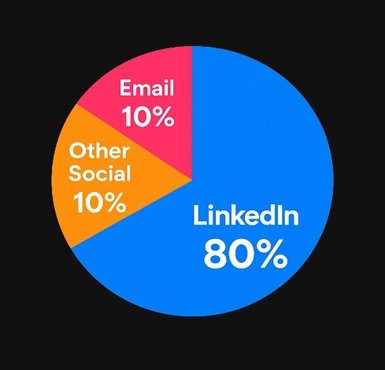
Lead nurturing can include technical articles, application notes, product demonstrations, webinar invitations and relevant case studies.
The timing and content of follow-up should reflect the prospect’s level of interest and buying stage.
12. Measure LinkedIn Marketing Performance Using Business KPIs
A successful LinkedIn marketing strategy should be measured through meaningful business indicators rather than follower counts alone.
Important performance indicators include:
| KPI | What it measures |
| Target audience reach | Visibility among relevant professional audiences |
| Engagement rate | Interaction with posts and campaigns |
| Website visits | Traffic generated from LinkedIn |
| Lead form submissions | Enquiries captured through LinkedIn |
| Qualified leads | Prospects matching your target customer profile |
| Cost per lead | Advertising spend per captured lead |
| Cost per qualified lead | Advertising investment per relevant business opportunity |
| Sales meetings | Meetings generated from LinkedIn activity |
| RFQs and quotations | Commercial enquiries and quotation opportunities |
| Sales pipeline value | Potential business value associated with qualified opportunities |
The most important distinction is between a general social media lead and a qualified B2B sales opportunity.
A campaign generating 100 enquiries may appear successful, but if only five enquiries come from relevant companies, the commercial value may be limited.
A smaller number of well-qualified laboratory equipment enquiries may be more valuable than a large number of unrelated contacts.
LinkedIn itself recommends establishing meaningful KPIs and tracking lead quality and business outcomes rather than relying exclusively on engagement metrics. (LinkedIn lead generation and measurement guidance)
13. Common LinkedIn Marketing Mistakes Scientific Equipment Companies Should Avoid
Even companies with excellent products can struggle to generate business opportunities through LinkedIn when their marketing approach is poorly planned.
Avoid these common mistakes:
1. Treating LinkedIn as an online brochure: Repeated product advertisements do not establish technical authority. Include educational and application-based content.
2. Targeting everyone: A general audience wastes resources. Define your ideal customer profile and buyer personas.
3. Sending generic connection requests: Personalize professional outreach around the recipient’s role and business interests.
4. Ignoring technical content: Scientific buyers need detailed information. Publish accurate specifications, applications and technical explanations.
5. Failing to optimize the website: LinkedIn traffic has limited value if visitors cannot find relevant product information or submit enquiries.
6. Measuring success through followers alone: Prioritize qualified leads, meetings, RFQs and sales opportunities.
7. Failing to follow up: A delayed response can weaken a valuable business opportunity.
8. Promising unsupported results: Avoid exaggerated claims about product performance, advertising results or guaranteed sales.
A structured approach helps companies build credibility while making better use of their marketing resources.
14. A Practical 90-Day LinkedIn Lead Generation Plan for Scientific Instrument Manufacturers
Scientific instrument companies can begin with a focused 90-day program rather than launching multiple campaigns without a clear strategy.
Month 1: Research, Positioning and Preparation
- Define priority products and target industries.
- Identify laboratory directors, procurement managers and technical decision-makers.
- Develop ideal customer profiles.
- Optimize the LinkedIn Company Page and relevant executive profiles.
- Audit product pages and enquiry forms on the company website.
- Create a content calendar based on product applications and buyer requirements.
Month 2: Content Marketing and Audience Development
- Publish two or three relevant posts per week, according to available resources.
- Share technical articles, application insights and product demonstrations.
- Encourage product specialists and company leadership to contribute.
- Develop relevant prospect and target account lists.
- Begin relationship-focused professional outreach.
- Test selected LinkedIn advertising campaigns where appropriate.
Month 3: Lead Generation and Performance Optimization
- Launch or refine targeted lead-generation campaigns.
- Test relevant audience segments and campaign messages.
- Develop product-specific landing pages.
- Review lead quality and follow-up performance.
- Integrate LinkedIn enquiries with your CRM.
- Evaluate cost per qualified lead, meetings, RFQs and sales opportunities.
- Adjust the strategy based on actual results.
A 90-day program should establish a measurable foundation. It should not be treated as a promise that every company will achieve a specific sales result within that period.
15. Why Scientific Instrument Manufacturers Need a Specialist B2B Digital Marketing Agency
Marketing scientific instruments requires an understanding of both the products and the professionals who purchase them.
A general marketing campaign may generate website traffic, impressions and social media engagement without producing meaningful scientific equipment enquiries.
A specialized approach considers the technical requirements of laboratory buyers, the purchasing process, the product portfolio, industry applications and the commercial objectives of the manufacturer.
This is where CRESOLTEK positions itself as a strategic B2B digital marketing partner.
With a focus on laboratory equipment, scientific instruments, medical equipment, life sciences and industrial testing sectors, CRESOLTEK combines technical industry understanding with digital marketing strategies.
Our services include:
- B2B lead generation.
- LinkedIn marketing and professional audience development.
- SEO and content marketing.
- Google Ads and targeted digital advertising.
- Website and landing page optimization.
- Lead acquisition and nurturing.
- Brand awareness and positioning.
- Market analysis and market expansion.
- AI-powered digital marketing solutions.
Our objective is to help manufacturers, distributors, dealers and suppliers reach relevant professional audiences, strengthen their digital presence and develop qualified business opportunities.
Learn more about CRESOLTEK’s B2B Lead Generation Services and AI Marketing Services.
Conclusion: Turn LinkedIn into a Strategic B2B Sales Channel
LinkedIn offers scientific instrument manufacturers an opportunity to reach professionals involved in equipment research, technical evaluation, supplier selection and procurement.
However, generating meaningful business opportunities requires more than publishing occasional company updates or sending random connection requests.
It requires a structured B2B marketing strategy that brings together accurate audience targeting, useful technical content, professional networking, paid advertising, website optimization, lead qualification and consistent sales follow-up.
Manufacturers that understand their buying committees and provide relevant information throughout the purchasing journey can use LinkedIn to strengthen brand credibility and support international business development.
The opportunity is not simply to gain more followers. It is to build relationships with the right laboratory directors, procurement managers, research professionals, distributors and business decision-makers.
Is your scientific instrument company reaching the right buyers on LinkedIn?
CRESOLTEK helps laboratory equipment manufacturers, scientific instrument companies and technical B2B businesses develop strategic digital marketing and lead-generation programs.
Visit www.cresoltek.com or explore our B2B Lead Generation Services to discuss a strategy for reaching your target customers.
CRESOLTEK — Your Growth, Our Mission.

Frequently Asked Questions About LinkedIn Marketing for Scientific Instrument Manufacturers
1. Is LinkedIn effective for B2B lead generation?
Yes. LinkedIn provides access to a professional audience and offers company, job title, industry and seniority targeting options. Businesses can use organic content, advertising and professional networking to identify and engage relevant B2B prospects.
2. How can scientific instrument manufacturers generate leads on LinkedIn?
Manufacturers can generate leads by optimizing their Company Pages, publishing technical content, identifying relevant prospects through Sales Navigator, developing professional relationships and running targeted advertising campaigns with appropriate enquiry forms.
3. How can I find procurement managers on LinkedIn?
You can search for procurement managers using LinkedIn search and Sales Navigator. Relevant filters include job title, current company, industry, seniority and geographical location. You can also build lists of target organizations and identify purchasing professionals within those companies.
4. How can laboratory equipment suppliers reach laboratory directors?
Laboratory equipment suppliers should identify laboratory directors, laboratory managers and research leaders in their target industries. They can reach these professionals through relevant technical posts, application notes, product demonstrations, professional networking and targeted LinkedIn advertising.
5. What is LinkedIn Sales Navigator?
LinkedIn Sales Navigator is a sales prospecting solution that provides advanced lead and company search capabilities. It helps sales professionals identify potential customers using filters such as company, industry, job title, seniority and geography.
6. Is LinkedIn marketing suitable for small scientific instrument manufacturers?
Yes. Smaller manufacturers can use LinkedIn to establish professional credibility, showcase specialized products, build distributor relationships and connect with relevant decision-makers. A focused strategy can be more practical than trying to market to a broad audience.
7. How often should scientific equipment companies post on LinkedIn?
A practical starting point is two or three useful posts per week, depending on available content resources. Consistency, relevance and technical quality are generally more important than publishing large quantities of repetitive promotional material.
8. What type of content should laboratory equipment manufacturers publish on LinkedIn?
Useful content includes product demonstrations, technical application notes, instrument comparisons, educational articles, laboratory testing insights, product announcements, customer case studies and industry updates.
9. How can LinkedIn Ads generate leads for laboratory equipment companies?
LinkedIn Ads can target selected professional audiences using available attributes such as job titles, industries, company information and seniority. Advertisers can promote product information, demonstrations, catalogues and quotation opportunities through suitable campaign formats.
10. What are LinkedIn Lead Gen Forms?
LinkedIn Lead Gen Forms are forms attached to eligible LinkedIn advertising campaigns. They allow businesses to collect prospect information, often with profile details pre-filled, and can help capture product enquiries and other business leads.
11. How much does LinkedIn advertising cost?
LinkedIn advertising costs vary depending on the target audience, market, competition, campaign format, bidding strategy and advertising objective. Businesses should establish a test budget and evaluate campaign performance using cost per qualified lead and other relevant commercial indicators.
12. Can LinkedIn help scientific instrument manufacturers find international distributors?
Yes. Manufacturers can identify scientific equipment distributors, laboratory suppliers, resellers and technical trading companies in selected geographical markets. Professional outreach and distributor-focused content can support international partnership development.
13. How do I reach pharmaceutical procurement managers on LinkedIn?
Develop a target account list of pharmaceutical manufacturers and related organizations. Identify relevant procurement, purchasing, laboratory and quality management professionals, then share content addressing analytical instrumentation, pharmaceutical testing and laboratory requirements.
14. What is the difference between LinkedIn marketing and LinkedIn lead generation?
LinkedIn marketing is the broader activity of building brand awareness, professional visibility and customer relationships. LinkedIn lead generation specifically focuses on identifying potential customers and converting their interest into measurable business enquiries.
15. Should scientific instrument manufacturers use personal profiles or Company Pages?
Both have important roles. Company Pages communicate the organization’s products, capabilities and business information. Personal profiles allow executives, technical specialists and sales professionals to demonstrate expertise and build individual business relationships.
16. How can I measure LinkedIn lead-generation success?
Measure relevant website visits, lead submissions, qualified enquiries, cost per lead, cost per qualified lead, sales meetings, RFQs, quotations and sales opportunities. Business results should be prioritized over follower counts and general engagement.
17. How long does it take to generate B2B leads through LinkedIn?
Timelines vary depending on the target market, product category, audience size, brand recognition, advertising budget and sales process. Some campaigns may generate initial enquiries relatively quickly, while complex scientific equipment purchases may require extended relationship building and technical evaluation.
18. Can LinkedIn marketing work together with SEO and Google Ads?
Yes. LinkedIn can help identify and engage professional audiences, while SEO attracts users actively searching for relevant products and Google Ads can target selected commercial searches. Combining these channels can create a more comprehensive B2B marketing strategy.
19. Why should scientific instrument manufacturers hire a specialist B2B marketing agency?
A specialist agency can develop marketing strategies around technical products, industry applications, complex purchasing processes and professional decision-makers. This helps align campaigns, content and lead-generation activities with the manufacturer’s actual commercial objectives.
20. How can CRESOLTEK help scientific instrument manufacturers generate B2B leads?
CRESOLTEK offers industry-focused digital marketing and B2B lead-generation services for laboratory equipment manufacturers, scientific instrument companies and technical businesses. Its approach combines LinkedIn marketing, SEO, content marketing, paid advertising, website optimization and marketing automation to help businesses reach relevant decision-makers and develop qualified sales opportunities.
Visit www.cresoltek.com to learn more about its services.